





Sunscreen Formulation Matters A LOT

The Short Story
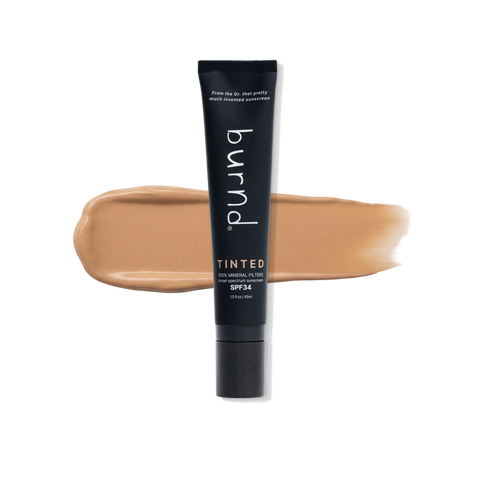
If you just want the bottom line: Not all sunscreens are the same when it comes to the environment—even if they have the same active ingredients and water resistance rating. A recent scientific study found that the way a sunscreen is formulated (for example, as a water-in-oil emulsion or a regular lotion) makes a big difference in how much of its active ingredients wash off your skin and end up in the water. Water-in-oil products like those from burnd and anhydrous (water-free) sunscreens release much less of these chemicals into the water than regular lotions, making them a better choice for anyone concerned about marine life and coral reefs. Importantly, two products with the same water resistance label can perform very differently in real-world conditions. For example, the water resistance test itself is limited to either 40 or 80 minutes and manufacturers must limit what they place on the label to the same, 40 or 80 minutes, even if their product lasts a lot longer. So, the label alone doesn’t tell the whole story.
A Deeper Dive
Sunscreens are crucial for protecting our skin from harmful UV rays, but their potential impact on the environment—especially on coral reefs and marine life—is something that is often raised. The main issue is that some of the ultraviolet filters (UVFs), which are the active ingredients that block the sun, can rinse off our skin when we are in the ocean, potentially harming sea life.
A 2023 study published in the International Journal of Cosmetic Science* set out to measure exactly how much of these UVFs actually wash off during typical ocean use, and whether the type of sunscreen formula makes a difference. Researchers tested eight different commercial sunscreens (lotions, sticks, and sprays) on pig skin (a good model for human skin), then simulated ocean swimming by rinsing the skin in synthetic seawater for 40 minutes. They measured how much of six common UVFs ended up in the water.
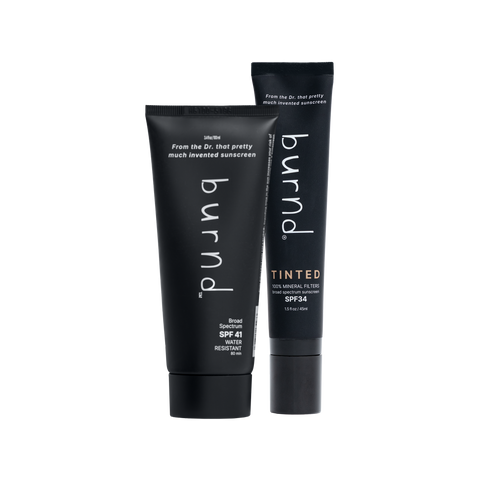
The results were clear: most sunscreen and UVF combinations released less than 10% of their active ingredients into the water—much less than the 25–100% assumed by the groups doing the environmental risk models. But the biggest factor wasn’t the type of UVF, but the formula of the sunscreen itself. Water-in-oil (W/O) emulsions like the technology behind burnd’s SPF 41 and anhydrous formulas (like sticks and many sprays) consistently released 5% or less of their UVFs – that’s a quarter or less than previously assumed. In contrast, the more common oil-in-water (O/W) lotions released much more, with up to 20% of some UVFs washing off in the worst case. Regarding the ingredients themselves, not the formulations, oxybenzone performed the worst which makes good sense as its the more water soluble of the organic sunscreens. Avobenzone, for more complicated reasons, also showed relatively high washoff.
Why is formulation so critical? W/O and anhydrous formulas are more hydrophobic, meaning they repel water and hold onto their UVFs better when you swim, surf, water ski and so forth. O/W lotions are more likely to let their UVFs escape into the water. The study also found that water-resistant sunscreens tended to perform better, but the current water resistance tests don’t always reflect real-world environmental exposure. In fact, two products with the same water resistance label can behave very differently in the real world, especially in salt water or vigorous activities like surfing.
Other research and consumer tests have shown that SPF and water resistance can drop much more in real-world situations, and that products with similar labels can perform very differently due to differences in formulation and the types of film-forming agents used. This means that just picking a sunscreen based on its water resistance claim may not be enough to minimize environmental impact.
So, what does this mean for consumers who care about the environment? If you want to minimize your impact on the ocean, look for w/o sunscreens or anhydrous products. These are more likely to stay on your skin and out of the sea. Unfortunately, unless you are a formulation chemist, it's pretty hard to tell from the ingredient what kind of formula is used so hopefully, the companies taking the time to do it right, are telling you about that in their messaging.
And for regulators and scientists, the study highlights the need to consider not just the ingredients, but also the formulation, when assessing the environmental safety of sunscreens.
In short, choosing the right sunscreen isn’t just about protecting your skin—it can help protect the world’s oceans too. And remember, two products with the same water resistance numbers may not be equal when it comes to real-world performance and environmental safety. At burnd, performance drives everything we do and we have formulated our SPF 41 to stay put.
Read more

Let's dive into the science and truth behind reef safety, Octinoxate and water resistant labels on sunscreen and skincare products.
Discover the math, science and technology behind burnd's high performance sunscreen and skincare products.

Want to learn more from us?
By signing up, you agree with our privacy policy.