






Hard vs Soft Water: Why Most Cleansers Fail

We at burnd travel... a lot. As nomads, we need products that work flawlessly under all conditions.
Have you ever noticed how your favorite cleanser works like a charm at home, but the second you wash your face in a hotel room or a friend's apartment, it completely changes? It either refuses to foam, feels slimy, or it leaves a weird, tight film on your skin.
You aren't imagining things. It's the water.
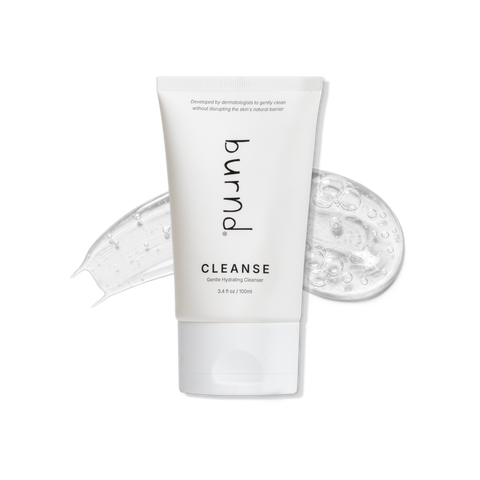
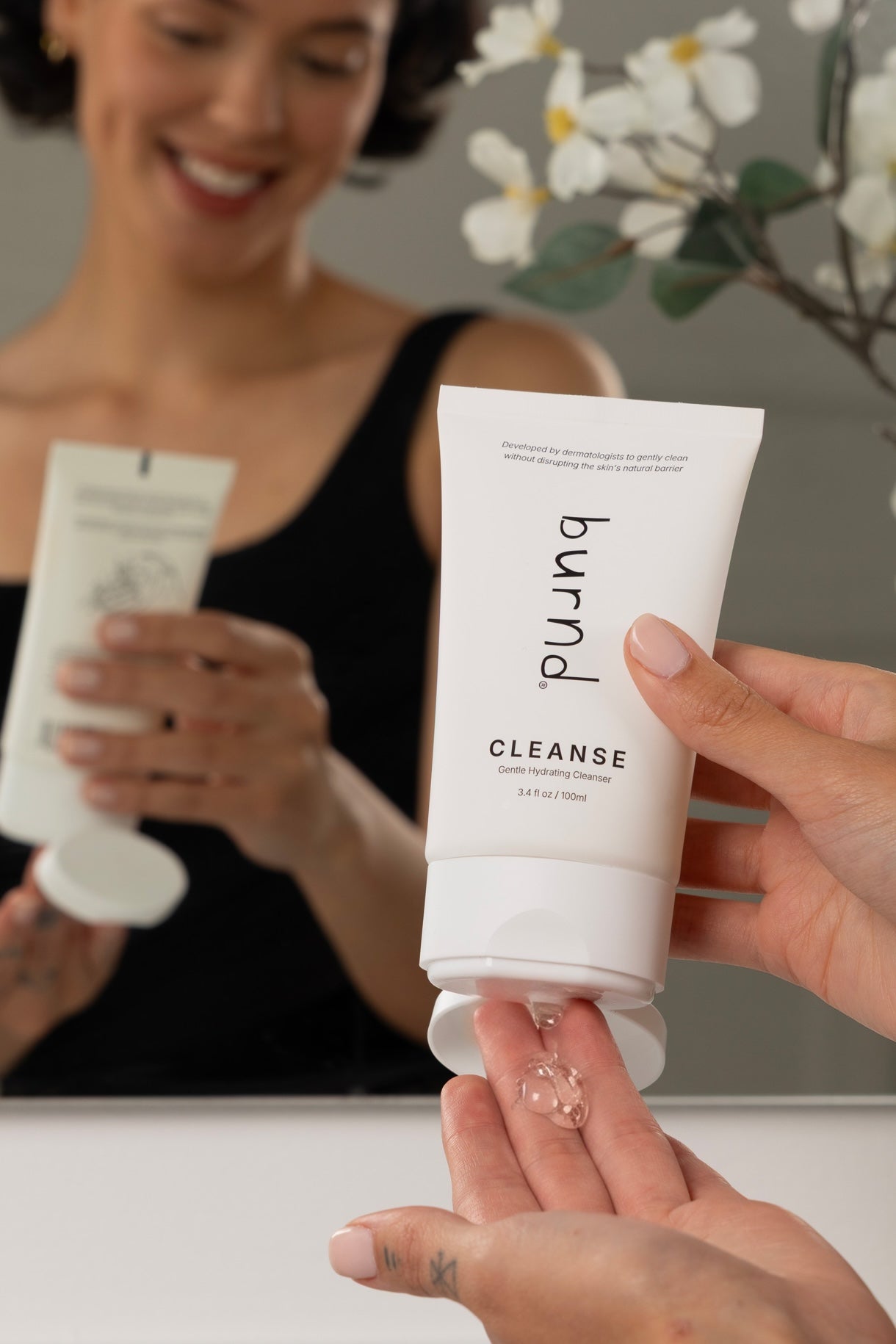
Depending on where you are, you're washing with either hard water or soft water. Either one can trip up traditional cleansers. We built burnd Cleanse to work great in both, so you get a perfect, consistent and gentle wash every single time, no matter where your travels bring you.

Here's a look at what's actually in water, how cleansers work, and how burnd Cleanse was purposely built to handle any faucet with ease.
The short version: Most cleansers behave differently depending on your tap water. Hard water makes them leave a tight, scummy film; soft water makes them feel slimy and slow to rinse. burnd Cleanse is built with a mineral-grabbing ingredient and gentle, charge-resistant plant cleansers, so it works the same in both - at a mild, skin-friendly pH. Curious how? The full story is below.
The short version: Most cleansers behave differently depending on your tap water. Hard water makes them leave a tight, scummy film; soft water makes them feel slimy and slow to rinse. burnd Cleanse is built with a mineral-grabbing ingredient and gentle, charge-resistant plant cleansers, so it works the same in both - at a mild, skin-friendly pH. Curious how? The full story is below.
What's Actually in The Water That Messes With Cleansers
Tap water carries dissolved minerals, mainly calcium and magnesium. How much of them is what makes water "hard" or "soft." These minerals aren't bad to drink, but they have a real impact on how a cleanser behaves on your skin.
- Lots of minerals = Hard Water: The water is crowded with charged minerals that latch onto traditional cleansers, making them "fall out" of the formula and leaving behind a skin-irritating scum.
- Very few minerals = Soft Water: No minerals, so surfactants work almost too well. The result is a really aggressive foam that can leave a slimy feeling film that just won't rinse away.
There's no magic "just right" amount of minerals that a cleanser needs, and water varies tremendously from location to location. burnd's approach is science first: build a formula that performs the same across the whole likely range of conditions.
First: How Does a Cleanser Actually Work?
To understand why water quality trips up so many cleansers, it helps to know how a cleanser works in the first place.
Water alone can't wash away oil, makeup, or daily grime, because oil and water don't mix. To bridge that gap, cleansers use ingredients called surfactants (cleansing agents).Think of a surfactant molecule as having two halves, a tail and a head:
- The tail half loves oil and hates water. It grabs onto the oily stuff on your skin: dirt, excess sebum, sunscreen, and makeup.
- The head half loves water. When you rinse, it mixes with the water from your tap and drags the tail along with it, with all of the oily stuff coming along for the ride. Those same surfactants are also what create and stabilize the foam you see when you lather up.
Here's the detail that matters for hard water: a lot of traditional cleansers depend on a water-loving head that carries a small negative electrical charge. Hold that thought.
Hard Water: Soap Scum and Tight Skin
Water with high levels of dissolved calcium and magnesium is called hard water. Those minerals, along with others, come up out of the ground with the water, and while they're fine to drink, they wreak havoc on many cleansers.This is where the charge becomes important. Calcium and magnesium each carry a double positive charge, Ca++ and Mg++. Many traditional cleansers carry a single negative charge on their head. These are called anionic surfactants, in case you care. Because a single mineral atom has two positive charges to spend, it can grab two cleanser molecules at once and clamp them together, pulling them out of the water as a microscopic "soap scum." That scum doesn't rinse away well. It clings to your skin, traps dirt, and strips your natural oils, leaving your face feeling dry, tight, and irritated.
burnd Science: We take a three-part approach...
- The Mineral Magnet. We include a specialized, biodegradable ingredient called Trisodium Ethylenediamine Disuccinate. It captures much of the charged minerals in hard water before they can ever reach your cleanser and cause trouble.
- Charge-Resistant Cleansers. Part of our surfactant blend uses plant-derived cleansers like Decyl Glucoside and Caprylyl/Capryl Glucoside. They're sugar-based cleansers, built on the same idea as the sweeteners in stevia and monk fruit: a sugar molecule joined to a larger plant compound, a structure chemists call a glycoside. In chemistry terms, these are non-ionic, meaning they are neutral and carry no electrical charge at all. Because they're neutral, the positive minerals in hard water have nothing to grab. They don't bind, they don't form scum, they don't care about the calcium and magnesium, they just keep cleaning.
- A Gentler, Charge-Tolerant Anionic. We round out the system with an amino-acid-based cleanser, Sodium Cocoyl Glutamate (sourced from coconut and corn). It does carry a charge, but unlike the harsh soaps and sulfates in old-school cleansers, it's far less bothered by hard-water minerals. It keeps lathering and cleaning where traditional cleansers would be crashing into scum.
Together, these three lift away impurities without leaving that stripped, over-tight feeling, even in the hardest water.
Soft Water: The Endless Rinse
As above, soft water has very few minerals. Water can be naturally soft, or it can be softened at home by a system that swaps out the calcium and magnesium - those are the big tanks in your basement hooked up to the incoming water pipe.
With almost no minerals around, there's nothing to keep the cleanser foam in check. In soft water, standard cleansers can lather like crazy and leave a slimy, heavy film. You end up splashing your face for what feels like forever, and the product still doesn't fully come off.
burnd Science: Instead of relying on harsh negatively charged surfactants like sulfates, our blend of gentle, plant-derived cleansers is tuned for balance. The glucosides and the amino-acid-based Sodium Cocoyl Glutamate give you a rich, satisfying lather that still rinses away fast, even in the softest, most heavily conditioned water. No slime, no endless rinse.
A Quick Word on pH
There's one more thing that decides whether a cleanser feels gentle or harsh: pH, the measure of how acidic or alkaline something is. Your skin's surface is naturally a little acidic, usually around pH 4.5 to 5.5 - a protective layer sometimes called the acid mantle. This is a hidden reason old-school bar soaps can leave skin feeling tight and squeaky: true soap is pretty alkaline, often up around pH 9 or 10, and washing your face that far outside its natural range can disrupt that protective layer.
We balance burnd Cleanse to a mild, near-neutral pH of around 7.2. That's a world away from harsh alkaline soap, and it's right in the range where our gentle sugar-based glucosides and amino-acid-based cleanser do their best work. You get a real, thorough clean without knocking your skin off balance.
Consistent Performance, Happy Skin
For us, a great cleanser is one that works everywhere, is gentle, yet can remove a full day's dirt. Like all burnd products, we designed Cleanse from the ground up, pairing a mineral-neutralizing ingredient with a super-smart surfactant system built from charge-resistant non-ionic cleansers and a gentle, charge-tolerant amino-acid cleanser. burnd Cleanse delivers the same reliable results everywhere you go.
No tight, stripped feeling from hard water. No slimy, un-rinsed residue from soft water. Just clean, balanced, comfortable skin, wherever your travels take you.
Share
Read more

Why Zinc Oxide Still Sets the Standard for Safe Broad-Spectrum Sun Protection
When people ask what is the best mineral sunscreen ingredient, zinc oxide is always the answer. At Burnd, this is something we have believed for decades. In the early 1990s, burnd’s cofounder, Dr. ...

BEMT: A New Sunscreen Filter Comes to the US, and to burnd
Compared with Europe, Asia and Australia, American sunscreen makers have had a shorter list of UV filters to choose from. Social media has turned that into a story about American sunscreens being s...

Want to learn more from us?
By signing up, you agree with our privacy policy.